Piqelo Monitors.
Full Piqelo Review · US market

Sony INZONE M10S II

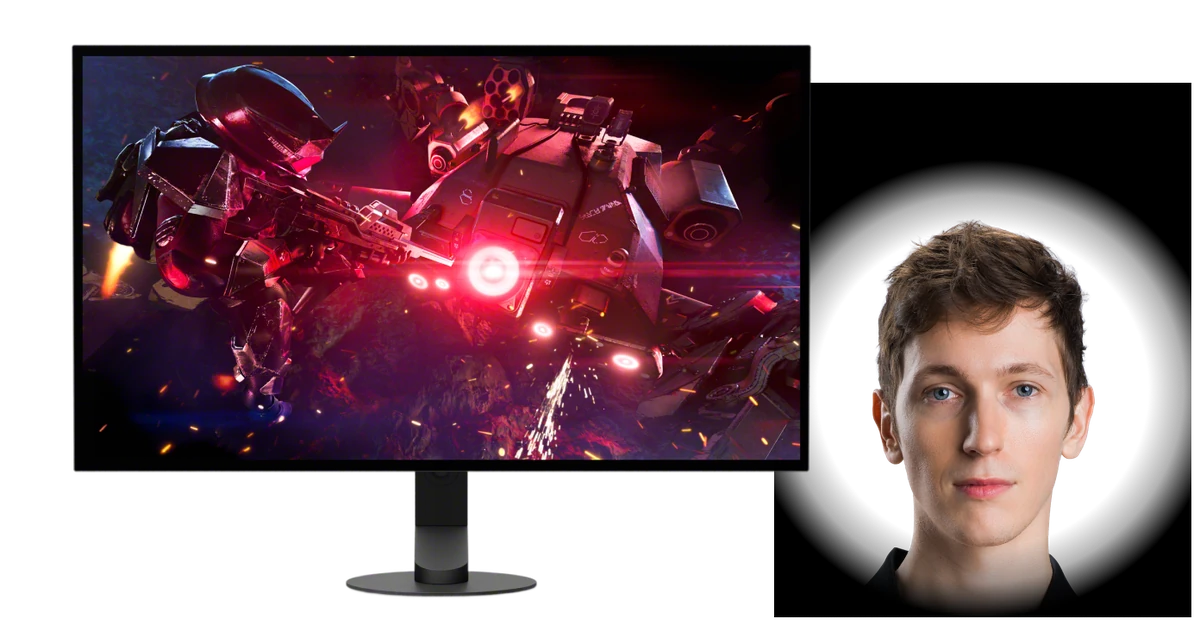
Sony's 26.5-inch QHD OLED esports monitor runs 540Hz natively and 720Hz in a lower-resolution dual mode, with a highly effective anti-glare coating.

Size
27"
Resolution
2560x1440
Panel
OLED
Refresh
540Hz
HDMI 2.1
Piqelo ScoreReview in progressOur overall product assessment
Search ScoreResearchingMatch to your preferences

Review in progress

How these scores work

The Piqelo Score is our published assessment of this exact product, including value. Your search does not change it. The Search Score uses the underlying research, your preferences and comparison with similarly priced products. Value is counted once; budget and required features are hard limits.

Price comparison: $825.00 to $1,374.98 (±25% of this product’s price). Comparable evidence is limited.

Match evidence or required features still need confirmation.

Sony INZONE M10S II
Decision snapshot

Esports OLED by Sony

Best for: Competitive esports gaming with premium OLED color and reflection control

Think twice if: You want 4K resolution, USB-C charging or built-in speakers

PC gamingConsoleMixed use
Plus points
  • QHD 540Hz plus 720Hz dual mode targets elite esports motion
  • OLED contrast and wide-gamut color create a rich gaming image
  • Super Anti-Glare coating rejects ambient reflections effectively
Keep in mind
  • 720Hz mode requires a lower 720p resolution
  • No modern USB-C laptop charging workflow
  • OLED static-content care still applies
At a glance

Pros and cons

The main reasons to choose it, and the compromises to weigh up.

What we like

  • QHD 540Hz plus 720Hz dual mode targets elite esports motion
  • OLED contrast and wide-gamut color create a rich gaming image
  • Super Anti-Glare coating rejects ambient reflections effectively

Keep in mind

  • 720Hz mode requires a lower 720p resolution
  • No modern USB-C laptop charging workflow
  • OLED static-content care still applies
Test results

Image quality, explained

Selected independent measurements, with what they mean in everyday use. Picture mode and test method matter; these results are not additional Piqelo scores.

Everyday brightness

Higher = brighter
SDR brightness
478 nitsBrightness stabilizer off · 25% window
SDR brightness
283 nitsFull white field; stabilizer off · 100% window

SDR is everyday desktop content. More brightness can help in a lit room; reflections and the size of the bright area still matter.

One independently tested sample; lab settings and methods affect results.

HDR highlights

Higher = brighter highlights
HDR brightness
>543 nitsGame · 25% window

HDR measures bright highlights in games and video. A small-window peak is different from full-screen brightness, so check the window and mode.

25% window in Game mode; measurements using other modes or window sizes require separate comparison.

Color accuracy

Lower ΔE = less error
Grayscale error · ΔE
6.17 DeltaEDefault
Grayscale error · ΔE
1.51 DeltaECalibrated

Delta E measures the difference from the target color or gray. A calibrated result describes that setup; it does not establish factory accuracy.

One independently tested sample; lab settings and methods affect results.

Motion & delay

Lower time = faster
Black-to-white response
0.2 ms540Hz; one-inch square · 540Hz
Black-to-white response
0.12 ms720Hz; one-inch square · 720Hz

Pixel response affects moving edges. Input lag is delay before the image starts changing; screen draw and signal processing are separate tests. Compare like-for-like methods.

Response, signal processing and total lag are different metrics; do not compare across lab methods.

No independent measured result in this profile yet for black depth & contrast, color range, screen consistency.

Explore all findings, test settings and sources
Close alternatives

When another monitor makes more sense

Piqelo does not force one universal winner. These are the closest researched alternatives when your priorities shift.

Research & detailsSources, measurements and full specificationsHide details
Decision confidence

How stable is this recommendation?

Confidence and evidence maturity stay separate from product fit and commerce.

Recommendation stabilityHighMultiple independent sources support a high-confidence exact-model profile.
Owner evidencePendingNo exact-model owner rating is being inferred.
Current buying routes1Commerce never changes the recommendation order.
Product views
Sony INZONE M10S II
Key specifications

The attributes that change the decision

Specs are kept separate from judgment so a fast number does not hide a practical trade-off.

Screen27"
Resolution2560x1440
PanelOLED
Refresh540Hz · dual mode up to 720Hz
Response0.02 ms GTG
HDMI 2.1Yes
USB-C power—
KVMNo
Transparent research

Sources behind this profile

Independent expert testing, exact-model owner signals and manufacturer specifications are visibly separated. Piqelo never counts itself as product evidence.

Independent expert sourceMatthias Metzler's original M10S II test finds strong image quality and gaming features, aimed at competitive PC gamers willing to pay for high refresh.Checked 2026-09-30Open exact source →
Independent expert sourceReviewer used M10S II for a month with several game types, tested glare by a bright window and assessed resolution handling. Anti-glare findings do not establish long-term reliability.Checked 2026-09-30Open exact source →
Manufacturer specification sourceSony evidence for Sony INZONE M10S II.Checked 2026-09-28Open exact source →
Independent expert sourceTechRadar finds the upgraded refresh, brightness and anti-glare coating make this a best-in-class esports display, though it remains expensive.Checked 2026-09-28Open exact source →
Independent expert sourceTom's Guide confirms elite esports speed and useful gaming tools; brightness and older USB connectivity are its notable compromises.Checked 2026-10-07Open exact source →
Independent expert sourceTesting supports sharp, colorful OLED image quality, flexible modes up to 720Hz, strong motion response and premium build.Checked 2026-10-07Open exact source →
From evidence to Piqelo Rating

What is still needed for a Piqelo Rating

Expert 50% · Owners 25% · Reliability 15% · Value 10%. The rating appears when all four components are supported.

Expert performance
5 eligible test sources collected. Performance calibration is still required.
Owner experience
At least 30 eligible exact-model owner reviews are needed; 0 are currently available.
Reliability
A supported reliability calculation needs model maturity, recurring risks and eligible owner evidence.
Current value
A current US price is available. Comparison with a supported peer group is still required.

Exact-model findings and measurements

Supported finding · reflection handling

The reviewer assessed the M10S II beside a bright window and found strong anti-glare behavior.

GamesRadar+ Open exact source →
Supported finding · hdr image

Tom’s Hardware measured over 543 nits at a 25% HDR window in Game mode. Keep the window size and operating mode attached to this measurement when comparing HDR results.

HDR brightness
>543 nitsGame · 25% window

25% window in Game mode; measurements using other modes or window sizes require separate comparison.

Tom's Hardware Open exact source →
Needs verification · excluded from score calibration · hdr image

Tom’s Guide reported 146 nits with a 10% HDR window and 231 nits in SDR. Its HDR mode and firmware are unspecified; retain the reported result as a separate observation requiring verification before calibrating a score.

HDR brightness
146 nits10% window
SDR brightness
231 nits

HDR mode and firmware are unspecified. This observation is not evidence of a defect, and is not directly equivalent to Tom’s Hardware’s 25% Game-mode result.

Tom's Guide Open exact source →
Supported finding · motion response

TechRadar finds the upgraded refresh rate, brightness and anti-glare coating make the INZONE M10S II a top-tier esports display.

TechRadar Open exact source →
Supported finding · sdr image

Tom's Hardware measured SDR 478 nits (Brightness stabilizer off); SDR 283 nits (Full white field; stabilizer off).

SDR brightness
478 nitsBrightness stabilizer off · 25% window
SDR brightness
283 nitsFull white field; stabilizer off · 100% window

One independently tested sample; lab settings and methods affect results.

Tom's Hardware Open exact source →
Supported finding · motion

Tom's Hardware reported 0.2 ms black-to-white transition (540Hz; one-inch square); 0.12 ms black-to-white transition (720Hz; one-inch square); 14.9 ms total control lag (Tested native refresh).

Black-to-white response
0.2 ms540Hz; one-inch square · 540Hz
Black-to-white response
0.12 ms720Hz; one-inch square · 720Hz
total control lag
14.9 msTested native refresh

Response, signal processing and total lag are different metrics; do not compare across lab methods.

Tom's Hardware Open exact source →
Supported finding · color

Default grayscale error was 6.17 dE; calibration lowered it to 1.51. Measured gamma averaged 2.21.

Grayscale error · ΔE
6.17 DeltaEDefault
Grayscale error · ΔE
1.51 DeltaECalibrated
Gamma
2.21 gammaCalibrated

One independently tested sample; lab settings and methods affect results.

Tom's Hardware Open exact source →
Supported finding · color

Tom's Guide reported Delta-E 0.26 and gamut extent 185.8% sRGB / 131.6% DCI-P3.

Average color error · ΔE
0.26 DeltaETested default
color gamut volume
185.8%Tested default · sRGB
color gamut volume
131.6%Tested default · DCI-P3

Gamut extent/volume must not be presented as absolute coverage; the Delta-E method is source-specific.

Tom's Guide Open exact source →

Next steps

Put this monitor in context

Trust & transparencyIndependent by design.

Some retailer links may be affiliate links. Commercial relationships never buy a score, recommendation, award or retailer order. As an Amazon Associate I earn from qualifying purchases.